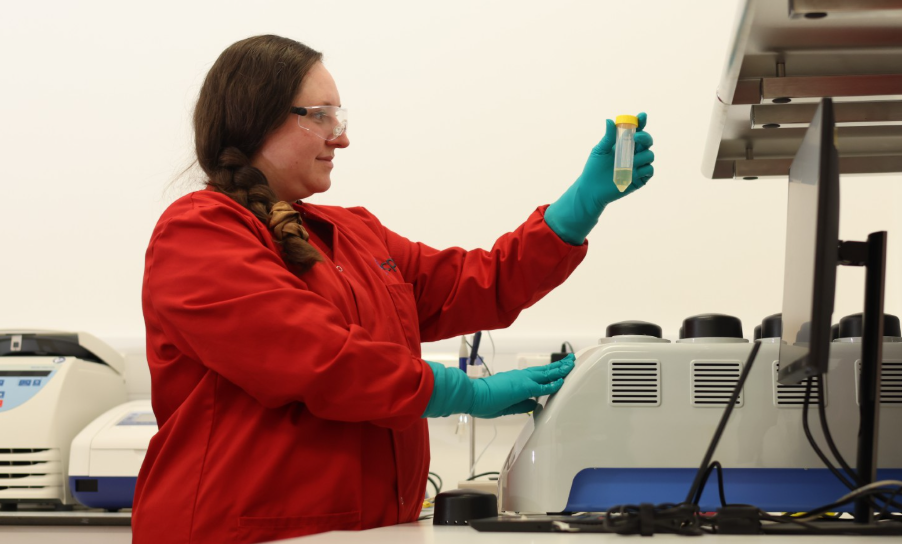
Early detection remains one of the most powerful levers for improving cancer outcomes, yet the pathway from scientific discovery to an approved, widely adopted diagnostic test is long, fragmented and often underresourced. To address this gap, a major public–private partnership led by CPI is now underway to accelerate next-generation cancer diagnostics by uniting academia, industry, clinicians, and technology providers in a coordinated national effort UK Launches £5m Cancer Diagnostics Programme for Early Detection | CPI).
Why This Partnership Matters
Despite the UK’s exceptional research base in genomics, proteomics, liquid biopsy technologies and biomarker discovery, too many innovations stall before reaching clinical adoption. The reasons are well recognised: inconsistent sample preparation workflows, limited standardisation, insufficient evidence generation, and challenges scaling promising technologies from bench to prototype to clinical validation.
This partnership aims to solve these systemic barriers through a structured, industry‑ programme that strengthens the entire translational pipeline, from early engineering and workflow optimisation through to multi‑omic data integration and pathways toward regulatory acceptance.
What the Programme Aims to Achieve
The public–private partnership focuses on building three critical capabilities:
- Standardised, high‑quality sample preparation for liquid biopsy diagnostics
The partnership is developing improved workflows for ctDNA and proteomic analysis, recognising that early‑stage biomarkers, particularly fragmented DNA and low abundance proteins, are highly sensitive to handling and pre‑analytical variation. Through stakeholder input and technical benchmarking, the programme is designing best‑practice workflows that improve reliability, sensitivity and reproducibility across research and clinical settings. - Translation of emerging technologies into validated prototypes
Many of the UK’s most promising innovations begin in academic laboratories. The partnership will identify, assess, and support leading technologies that enhance sample quality, extraction efficiency, automation or detection sensitivity. Engineering teams will work alongside researchers and industry specialists to convert concepts into working prototypes ready for in the longer term. - Foundations for an integrated multi‑omics data architecture
Modern diagnostics will rely on secure, interoperable data models capable of integrating genomic, proteomic, spatial, imaging and clinical datasets. Working with technology companies and cloud providers, the programme is creating a shared data architecture and early demonstrator system to support research, algorithm development, and long‑term multi‑omics capabilities.
Why Industry Engagement Is Central
Although academic excellence fuels discovery, industry involvement is essential to ensure translation and global adoption. This partnership offers companies, from major diagnostics manufacturers to SMEs, the opportunity to:
- Shape standards that will influence the next generation of cancer tests
- Access co‑developed IP and early‑stage technology insights
- Co‑design workflows aligned with regulatory expectations and clinical needs
- Guide data architecture requirements for scalable implementation
- Engage in structured evidence‑generation pathways
Industry partners also play a vital role in determining which technologies progress to prototype, and how solutions are optimised for manufacturing, automation and commercial deployment.
How you can get involved
An in-person programme kick-off workshop is scheduled for July 2026, bringing together industry, clinicians, researchers and patient groups. Key milestones and learning will be shared as the programme progresses, with opportunities for additional partners to engage as outputs develop.
The full report can be downloaded here.
Organisations interested in contributing to, or joining, the NG-Dx programme are encouraged to contact CPI to discuss participation.